Prior to entering this graduate program, I had very little knowledge of Univesal Design for Learning. As I’ve learned more about this practice and have gained more experience in the school system, I definitely see the benefits. “UDL is a framework for teaching and learning that includes proactive planning of curricula (goals, assessments, methods, and materials) and takes into account the variability of all learners” (UDL Intersections, 2014).
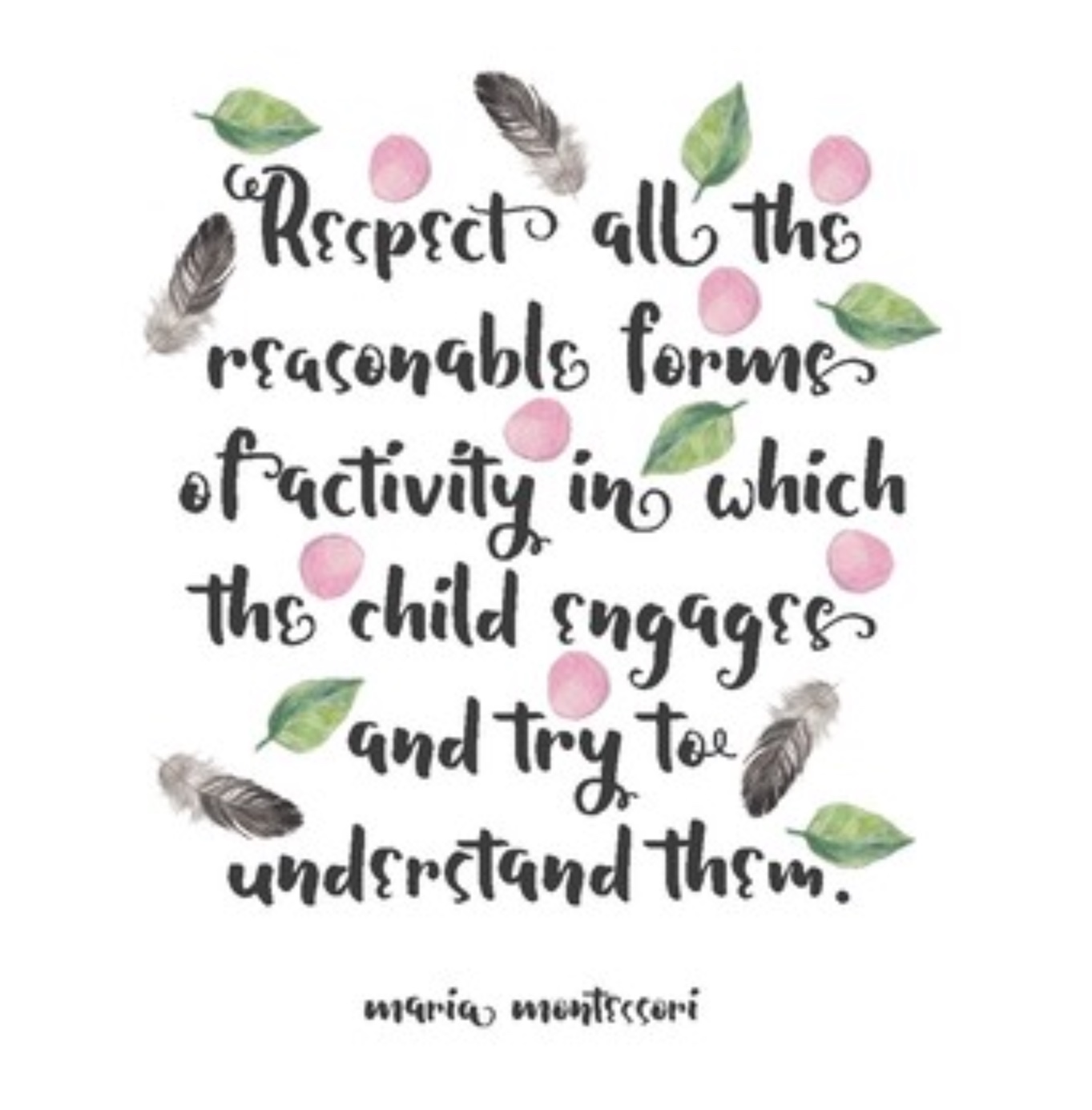
I currently work as a substitute teacher, so my work setting changes from day to day. For the most part, I’ve been in classrooms where there is no trace of UDL, and the structure is strictly lecture and note taking. However, I’ve also been in some classrooms where there is an abundance of UDL implementation, with a variety of learning and teaching practices. One school where I find myself taking jobs more frequently is Monocacy Montessori School in Frederick, Maryland. I’ve substituted at the school in special education, physical education, social studies and language arts. I completely fell in love with the Montessori method as soon as I stepped into my first classroom. The students are so much more engaged, cooperative, and they genuinely seem to enjoy learning. I see so many parallels with the Montessori method and Universal Design for Learning, which is why I think I saw so many students thriving.
Universal Design is evident as soon as you walk through the front door of the school. There is a ramp that leads to the main level instead of stairs. This allows students with physical disabilities to use the same entrance as their peers while still being accomodated. There are also two elevators in the school the students can use because the school is three stories. This is just one of many examples of Universal Design and Universal Design for Learning at Monocacy Montessori School.
While providing “push-in” support for a student receiving special education services, I observed 4th and 5th grade class’ math period. Unlike a lot of other schools I’ve subbed in, I saw students out of their seats working on a variety of different activities. Some students were playing math games with a partner, while others were using manipulatives to solve math problems. The student I was working with opted for a more traditional pencil and paper method. The thing that really impressed me was that all of the students were learning the same concept, but they got to choose how they learned it. This was exemplary of the Universal Design for Learning framework.“When we design learning environments proactively for variability, we anticipate and value the incredible strengths and diversity of our learners” (CAST, 2018).
While the terms Universal Design (UD) and Universal Design for Learning (UDL) are similar in meaning, there are some notable differences. “UD guides the development of products and built environments offering access to the greatest number of individuals from the outset without requiring costly or clumsy retrofitting” (UDL Intersections, 2014). In terms of architecture, some examples of UD include automatic doors, ramps, and elevators. In education, the focus is on making material accessible for everyone and decreasing the need for customized materials and accomodations. Meanwhile, Universal Design for Learning is based on research from the learning sciences and neuroscience. The goals of UDL are to offer flexible options to learners, present information in multiple ways, and provide multiple ways for students ot show what they’ve learned. This was encompassed in the math lesson I observed because students were given a multitude of choices for how they wanted to learn and practice the skill.
“When we design for variability using the UDL framework, clarifying the goals and integrating flexibility in engagement, representation, and action and expression, we acknowledge that learners do not learn in one linear pathway” (CAST, 2018). Montessori education echoes the principles of UDL. It is accepted that every student learns differently, and therefore, they should be allowed to choose why, what, and how they learn. Another example I observed of this was in a Montessori middle school social studies class. The students all had the same reading, but had the choice of reading a paper copy, reading a digital copy, or listening to an audio recording. The students then broke into groups engaged in collaborative discussions in a flexible seating environment. Finally, the students got to choose if they wanted to comprise a written report, PowerPoint, or oral presentation about what they had read. Allowing the students choices in how the received the material and how they exhibited their learning kept them more engaged throughout the class period. In addition, I noticed the students worked more efficiently and quickly. I believe this is because they utilized methods that reinforced their learning style.
While I’ve observed superb UDL implementation at the Montessori school, I’ve definitely seen other schools in our county that haven’t followed suit. At the elementary, middle, and high school level, I’ve observed a lot of negative behaviors in the classroom. I attribute a lot of this to students not being engaged in the learning process. For the most part, a “one size fits all” approach is still the norm in a lot of classrooms, which completely goes against all the principles of UDL. If a student doesn’t feel connected to their learning, they’re going to become bored or unmotivated, and be more likely to exhibit problematic behaviors. I know most, if not all teachers are educated on UDL. However, I predict they are overwhelmed with the quantity of tasks expected of them, and don’t feel they have the time to put it into practice. If teachers received ongoing education, support, and mentorship on how to implement UDL in the classroom, I think we would see student achievement increase and problematic behaviors decrease. This would create a more harmonious environment for students, teachers, and administrators alike.
References:
UDL & the Learning Brain. (2018). Retrieved from http://www.cast.org/binaries/content/assets/common/publications/articles/cast-udlandthebrain-20180321.pdf
UDL Intersections: Universal Design for Learning and Universal Design. (2014). Retrieved from https://blackboard.gwu.edu/bbcswebdav/pid-9206966-dt-content-rid-60789018_2/courses/45957_201901/UDL_UD_BRIEF.pdf


 Katelyn’s Reflections on UDL
Katelyn,
I totally agree with the quote you posted about UDL requiring active planning. I have found, as I’m sure most teachers have, is that you can never be too prepared or have planned early enough. Many times, I have found that I wasn’t as prepared or hadn’t planned enough to make my lessons successful. Active planning with all those involved in the lesson is extremely necessary. After starting this UDL class, I believe that I need to spend more time planning for upcoming lessons I’m doing with the 6th grade teacher I help co teach with. She is more of an active planner, so I should take notes from her.
Understanding how your students learn and knowing it’s never going to be the same is something many teachers still need to learn. I work with a Science teacher now who doesn’t understand why the students aren’t learning from his lecture and then test teaching strategy. I like how your Social Studies class were able to choose the media that worked for them when reading. I believe that having these options motivates students to want to learn. It’s more exciting for them when they are given options.
Kay
LikeLike
Katelyn,
I do not know much about Montessori schools so I appreciate you sharing your experience. I think that is so cool how the students were able to choose how they learned math. I’m hoping that more educators lean in that direction-teaching the same content but allowing different means of learning the content. I do agree that teachers and educators need more training when it comes to the concepts of UDL, because I believe some teachers are just stuck in their ways and just do not want to learn something new. As you said, it will create a “harmonious environment.” Thanks for sharing your thoughts!
LikeLike
Well done Katelyn! You’ve offered great examples of both UD and UDL. Indeed there are many parallels between Montessori school education and the UDL model. I completely concur, I to wish more teachers got exposed to training on UDL and am hopeful that will flourish. I look to you and others in this class to carry that baton forward as you to become more versed and expert in UDL.
LikeLike